Note: The DWARF Mini is currently available for pre-order, with shipping expected in January 2026.
Overview and Key Features
Compact, intuitive, and surprisingly capable, the DWARF Mini Smart Telescope is Dwarflab’s latest addition to the growing field of portable astrophotography systems. Positioned as the smaller sibling to the DWARF II and DWARF III, the Mini takes automation and portability to new extremes. With its integrated Sony IMX662 sensor, dual lenses, built-in filters, and smart tracking capabilities, it presents a compelling package for beginners and seasoned astrophotographers seeking a compact, no-fuss imaging solution.
After testing a prototype unit in various conditions, we had a smooth experience that belies the Mini’s unassuming size. Designed for portability without significantly compromising performance, the DWARF Mini is an all-in-one smart telescope that handles targeting, tracking, image capture, and live stacking directly through a mobile app.
Key features and takeaways:
- Ultra-portable all-in-one telescope with automated tracking, focusing, and stacking
- Features a Sony IMX662 sensor with large 2.9 µm pixels for low noise and high sensitivity
- Supports alt-az and EQ modes, with exposures up to 120 seconds in EQ mode
- Built-in dual-band and broadband filters, plus a dark frame shutter
- App-controlled interface with real-time stacking and basic editing options
Build Quality and Design
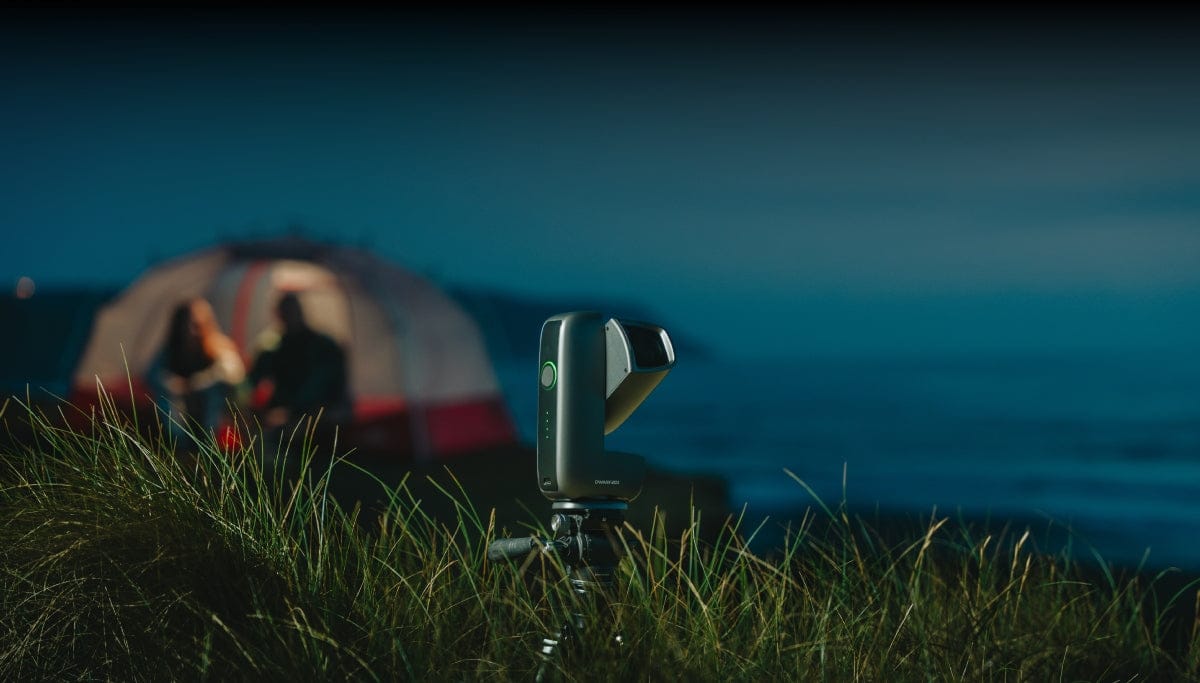
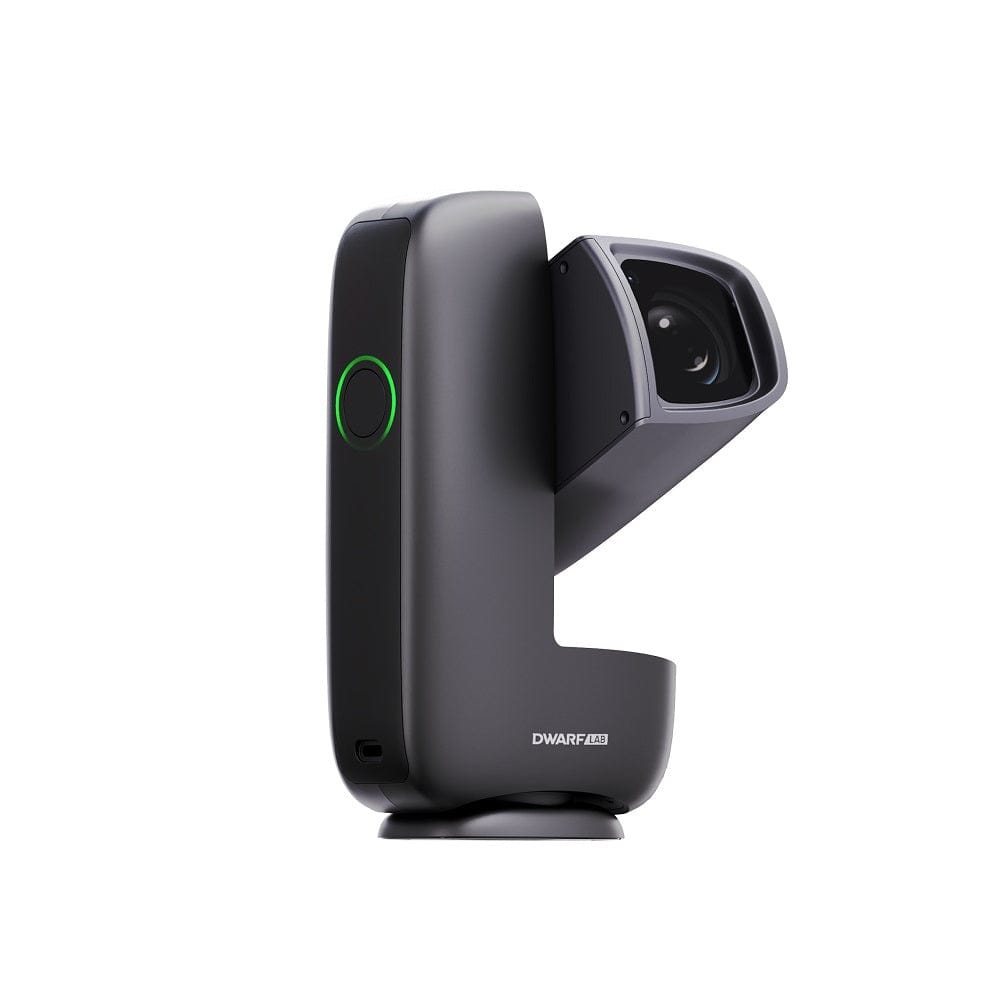
The DWARF Mini feels more like a high-end compact camera than a traditional telescope. Its vertical tower-style design allows the lens to articulate vertically while the base rotates 360 degrees, enabling full sky coverage without the risk of cable snags or mechanical collisions. At just under 0.9 kg, it’s incredibly travel-friendly and roughly the size of a large eggplant.
Construction is solid for a unit of this class, though at the time of writing, no carry case or protective cover is provided; which has become standard with smart telescopes. Dwarflab does offer a compatible tripod, but standard photography tripods also work well. Power is supplied via a 7000 mAh internal battery, with support for USB-C power banks for longer sessions.
The device comes with a USB-C cable and a solar filter for safe solar imaging. Internally, it includes a dual-lens system: a 150 mm f/5 telephoto lens with a 30 mm aperture and a secondary wide-angle lens for landscape and Milky Way shots. The resolution is 1920×1080 across both lenses—modest, but sufficient for social media sharing and casual use.
Performance in the Field
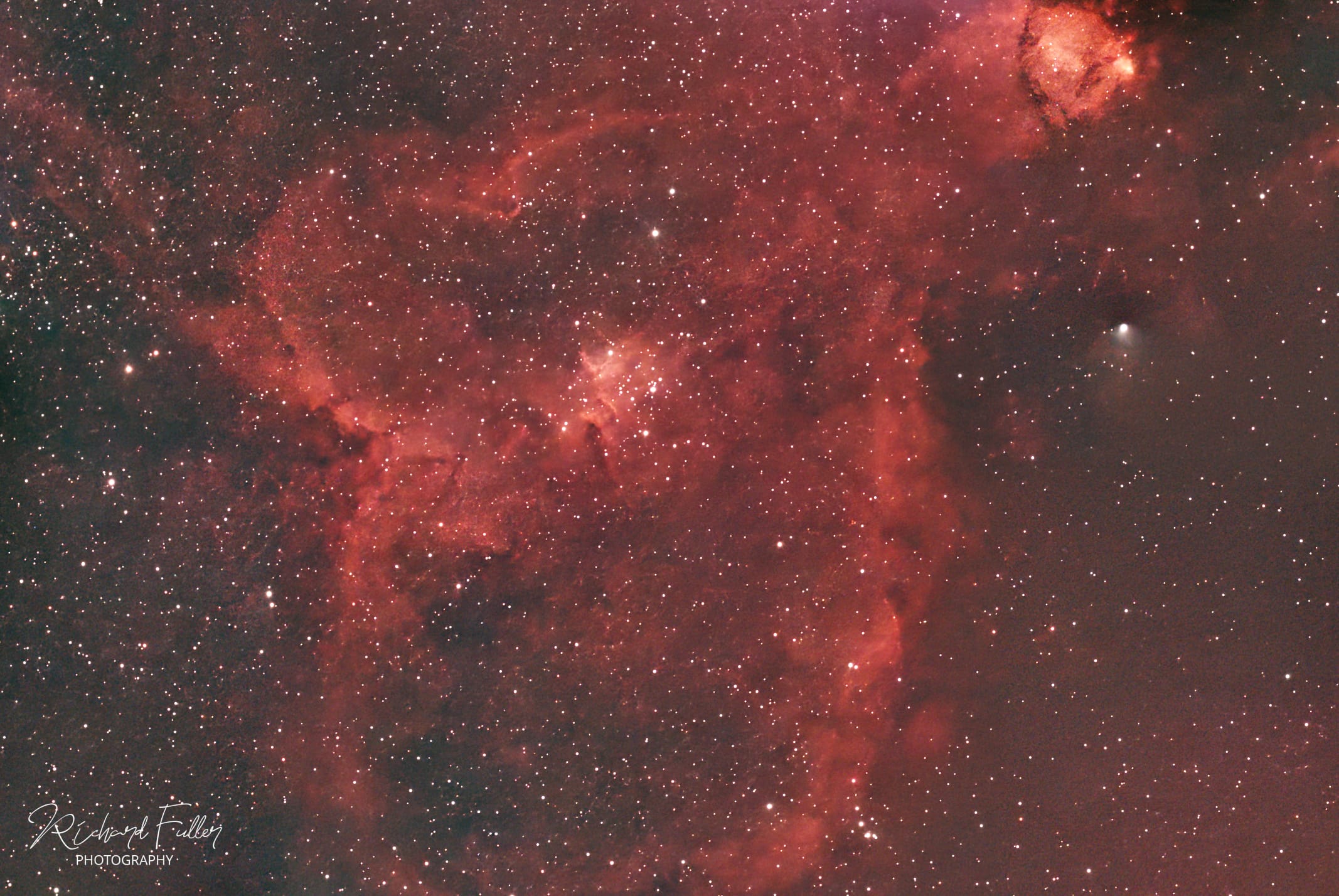
For a telescope that can be held in one hand, the DWARF Mini produces images that genuinely impress. Its ability to live stack hundreds of short exposures into clean, detailed images of DSOs like the Orion Nebula, Andromeda Galaxy, and the Pleiades cluster makes it a game-changer for entry-level astrophotography.
In alt-az mode, the Mini handled 10 to 15-second exposures with surprising grace, even under light-polluted skies. However, switching to EQ mode unlocks longer exposures up to 90 seconds, significantly improving data quality for faint targets. Reviewers found that 30 to 60-second subs were the sweet spot, offering a good balance of integration time and data retention.
Alignment in EQ mode doesn’t require a view of the celestial pole, which is a major plus for users with obstructed sightlines. The polar alignment workflow is handled via the app through a simple plate-solving routine, making setup quick and beginner-friendly.
The IMX662 sensor’s larger pixels help reduce noise and improve low-light sensitivity. Real-world testing confirmed its superior SNR compared to the DWARF 3’s IMX678 sensor. Metrics from long-exposure tests showed consistent star profiles and low eccentricity, with reviewers reporting minimal rejected frames even at 90 seconds.
Live stacking, auto-focus, and the included filters contribute to producing vibrant images with accurate colours, especially under dark skies. The onboard Stellar Studio app enables in-device editing, making it easy for beginners to generate satisfying final images without post-processing software.
Choosing the Right Camera (Built-in)
With the sensor, optics, and processing integrated into a single unit, the DWARF Mini doesn’t require additional cameras. However, understanding its sensor helps set expectations. The Sony IMX662 is a back-illuminated CMOS sensor with high quantum efficiency and excellent low-light performance.
Its 2.9 µm pixel pitch strikes a balance between resolution and sensitivity, making it well-suited for wide-field imaging. While limited to 2 MP output, the sensor delivers clean data that holds up surprisingly well in post-processing. Advanced users can export RAW frames for use in PixInsight or Photoshop, while beginners can rely entirely on the mobile app.

Final Thoughts: Strengths and Limitations
The DWARF Mini isn’t a replacement for a dedicated astrophotography rig, but it’s not meant to be. Its appeal lies in its simplicity, compactness, and smart features that lower the entry barrier to astrophotography. It’s ideal for:
- Beginners seeking a no-hassle entry point into imaging
- Travellers wanting a pocketable setup for dark-sky trips
- Experienced users looking for a secondary, portable rig
Limitations to keep in mind:
- Resolution limited to 1920×1080
- Fixed optics and field of view
- Requires app-based workflow with limited manual overrides
- Short run time compared to other smart telescopes
Still, for a smart telescope that can capture recognisable detail in nebulae and galaxies with minimal setup, the DWARF Mini is hard to beat at its size and price point.
In Summary:
- Smart, pocket-sized astrophotography rig with auto tracking and live stacking
- Sony IMX662 sensor delivers low-noise, high-SNR results with minimal post-processing
- EQ mode supports up to 120s exposures, no view of Polaris needed
- Dual-band and broadband filters included for better contrast in light pollution
- Great option for beginners, travellers, or as a secondary scope for experienced users