Meteor photography means leaving a wide-angle camera shooting for hours and letting the brighter meteors fall into the frame. Both branches of the Taurids peak in early November with little or no moonlight, and the Geminids, the richest shower of the year, follow on 13 to 14 December under a thin crescent Moon. This guide is for anyone with a camera that has manual exposure and a tripod. It covers where to aim, which settings to use and how to combine the results.
Before you start
- Kit: a camera that shoots RAW with manual exposure, the widest lens you have (14 to 24 mm on full frame, 10 to 16 mm on APS-C), a sturdy tripod and an interval timer, either built in or a remote.
- Power and dew: spare batteries kept warm in an inside pocket, and a lens hood or dew strap. Cold, damp November nights drain batteries and fog lenses.
- Knowledge assumed: setting ISO, aperture and shutter speed by hand. If that is new, read the astro.pics guide to ISO, aperture and exposure time first.
- Time needed: two hours of shooting at the very least. At Taurid rates, four hours or more is better.
How meteor photography works
Every shower has a radiant, the point its meteors appear to come from. Meteors can appear anywhere, but their trails all point back to it. The higher the radiant, the more meteors you see, so most showers are best after midnight when it has climbed.
Shower strength is quoted as a zenithal hourly rate (ZHR), the number one observer would count under a perfectly dark sky with the radiant overhead. Real counts are always lower. A camera catches fewer still, because only brighter meteors register in a single exposure.
Speed matters as much as numbers. The International Meteor Organization’s 2026 calendar lists the Taurids at 27 to 29 km/s and the Leonids at 71 km/s. A slow meteor lingers on each pixel for longer and records more strongly, so the Taurids photograph better than their low rates suggest.
The longest exposure you can use before stars visibly trail on a fixed tripod comes from a simple rule:
Maximum exposure (seconds) = 500 ÷ focal length (full-frame equivalent)
At 14 mm that gives about 35 seconds. Sensors with small pixels show trailing sooner, so on a modern high-resolution camera halve the result: 15 to 20 seconds at 14 mm, or 10 to 12 seconds at 24 mm.
The four showers to target from the UK
Peak dates and rates below come from the IMO calendar and the American Meteor Society’s 2026 shower calendar, which agree on every peak night. Radiant positions are for mid UK (52.5°N); from northern Scotland the radiant sits about five degrees lower, and from Cornwall about two degrees higher.
| Peak night (2026) | Shower | ZHR | Moon | Radiant from mid UK (GMT) |
|---|---|---|---|---|
| 4 to 5 November | South Taurids | 5 to 10 | 18% crescent, rises in the small hours | East-south-east at 20:00 (about 25° up); highest in the south near 00:40 (about 52°) |
| 11 to 12 November | North Taurids | 5 | New Moon on 9 November; dark all night | Highest in the south near 00:35 (about 59°) |
| 17 to 18 November | Leonids | About 15 | Near first quarter; sets before midnight | Rises in the north-east around 22:20; about 30° up by 02:00 and 48° by 04:00 |
| 13 to 14 December | Geminids | 150 | Thin crescent sets early in the evening | East at 22:00 (about 43°); highest in the south near 02:00 (about 70°) |
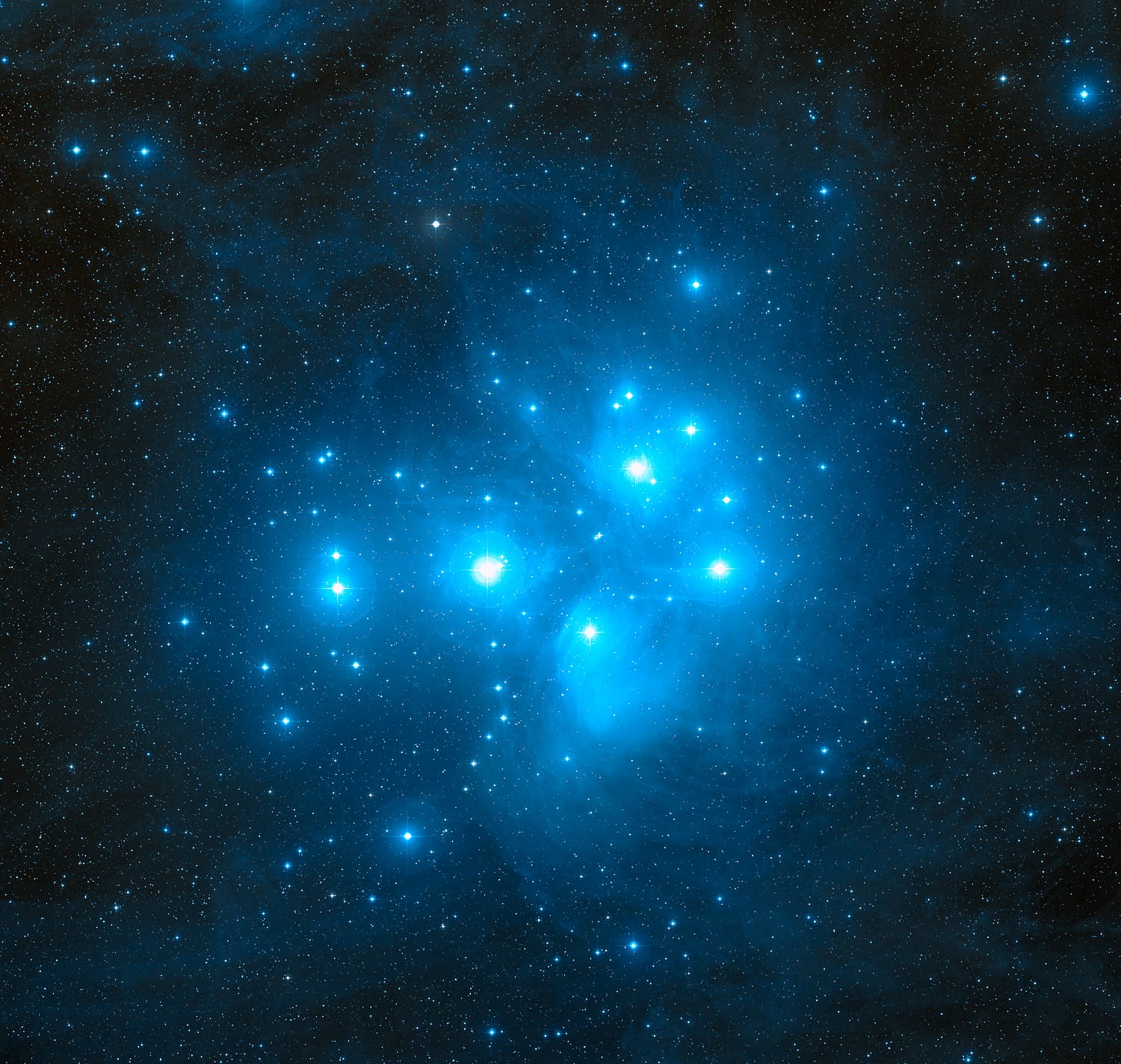
Both Taurid radiants sit in Taurus, just below the Pleiades. If you used the Moon and Pleiades occultation guide, you already know where to look. The IMO notes that the North Taurid peak is broad, lasting roughly ten days, and EarthSky points out that the two branches overlap through the first weeks of November, so any clear, dark night between 1 and 15 November is worth a try.
The Geminid maximum falls at about 14:00 GMT on 14 December, in UK daylight, but the peak is broad: shoot the night of 13 to 14 December and the following night too.
Where to point the camera
Aim 30 to 50 degrees away from the radiant and about 45 to 60 degrees above the horizon. Meteors near the radiant look short because they head almost towards you; those further away draw longer trails.
Face away from the brightest part of your sky, such as a nearby town, and keep any horizon low in the frame.
Camera settings to start with
- Set the camera to RAW, manual exposure and manual focus.
- Focus on a bright star using magnified live view, then tape the focus ring so a gloved hand cannot knock it.
- Open the lens to its widest aperture, or one stop down if the corner stars look like seagulls. f/2.8 to f/4 is the usual range.
- Set ISO 1600 to 3200 under a dark rural sky, or 800 to 1600 under a suburban sky. The histogram peak should sit about a third of the way from the left.
- Set the exposure from the rule above, then put the camera on continuous or interval shooting with the shortest gap it allows.
- Turn off long exposure noise reduction. It takes a dark frame after every shot and leaves the camera blind for half the night.
- Fix the white balance (around 3,900 K is a good start) so every frame matches when you combine them.
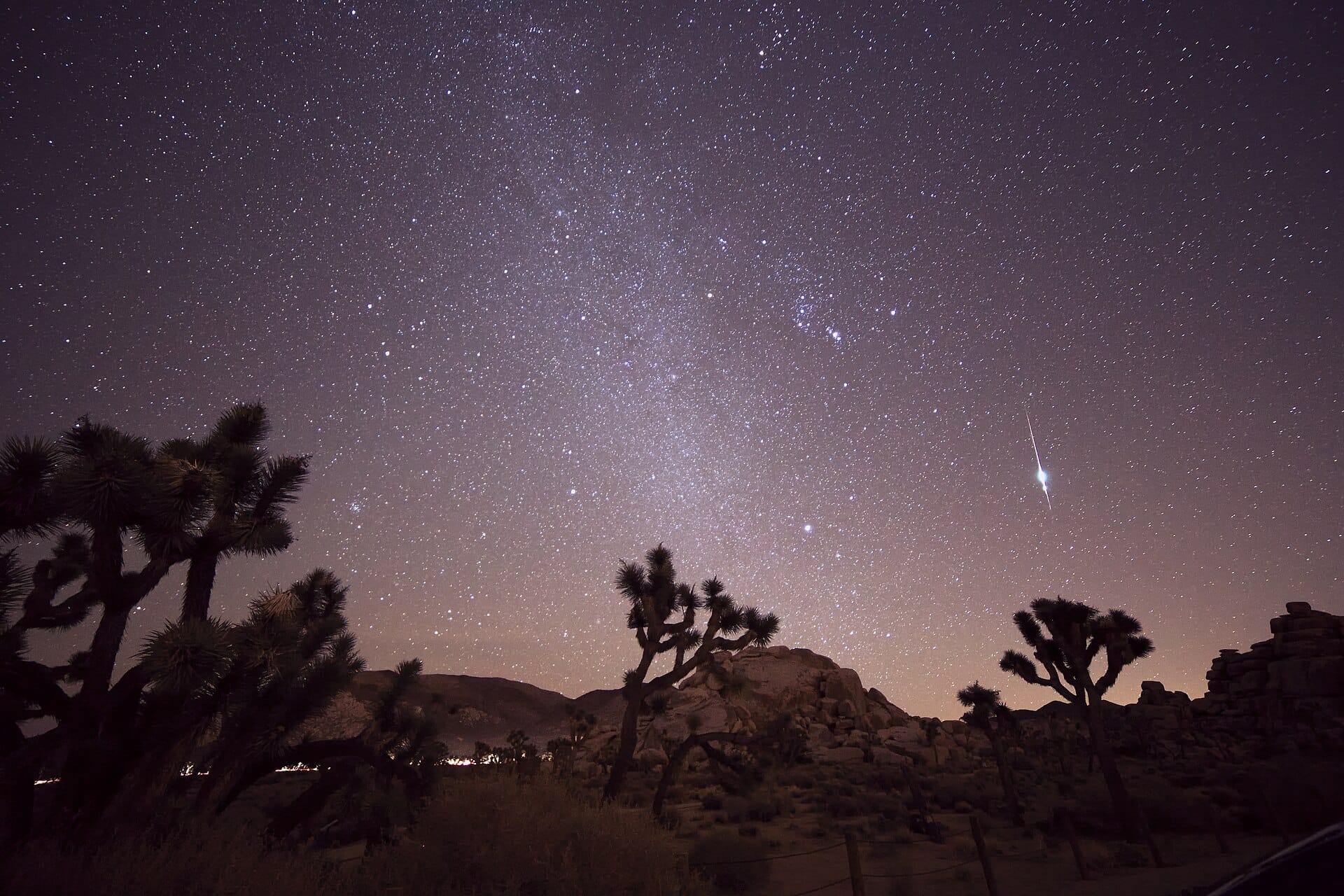
The Taurid fireball below was caught with exactly this approach: a 14 mm lens at f/2.8, ISO 6400 and a 30-second exposure under a dark desert sky. Under a brighter UK sky, use a lower ISO and a shorter exposure.
Longer lenses and star trackers
A 24 to 35 mm lens covers less sky, so you catch fewer meteors, but each one appears larger and brighter in the frame. Point it at an attractive area near the radiant (the Pleiades and Hyades for the Taurids, Orion or Gemini for the Geminids) so frames without meteors still make a good wide-field image. The guide to framing by focal length helps you choose how much sky to include.
On a star tracker you can expose for longer at a lower ISO for a cleaner sky, but the foreground blurs, so shoot it in a separate untracked frame.
Turning a night of frames into one image
Expect hundreds of frames and only a handful with meteors. Flag every frame with a streak, then check each one, because satellites and aircraft are far more common:
- Satellites: an even, straight line, often continuing across two or more frames in a row.
- Aircraft: a dotted or dashed line from flashing lights, usually with a red or green trail beside it.
- Meteors: appear in one frame only, often brighten and fade along the trail, and point back to the radiant. Bright ones can show green or orange colour.
To build a composite, use any editor that supports layers and masks. Start with one clean frame (or a stack of several) as the base, add each meteor frame as a layer set to the Lighten blend mode, and mask everything except the meteor. Because the sky turns during the night, rotate each layer so its stars line up with the base before masking. That keeps every trail pointing back to one radiant, as it did in the sky.
Quick reference
- Lens: widest available, f/2.8 to f/4.
- ISO: 1600 to 3200 under a dark sky; 800 to 1600 in the suburbs.
- Exposure: 500 ÷ focal length, halved on high-resolution sensors.
- Aim: 30 to 50 degrees from the radiant, 45 to 60 degrees up.
- Interval: shortest gap, long exposure noise reduction off.
- Best nights in 2026: 4 to 5 November, 11 to 12 November, 17 to 18 November and 13 to 14 December.
Next steps
Use the Taurid nights in early November as practice: low rates but slow, bright meteors, and dark skies after the new Moon on 9 November. By December you will have the focus, settings and battery routine worked out for the Geminids. Check the forecast and the Moon before each attempt with the tips in the guide to planning a night under the stars.
Sources: IMO Meteor Shower Calendar 2026; American Meteor Society 2026 meteor shower calendar; EarthSky Taurid guide (updated 29 October 2026). Radiant altitudes and Moon times calculated for 52.5°N.