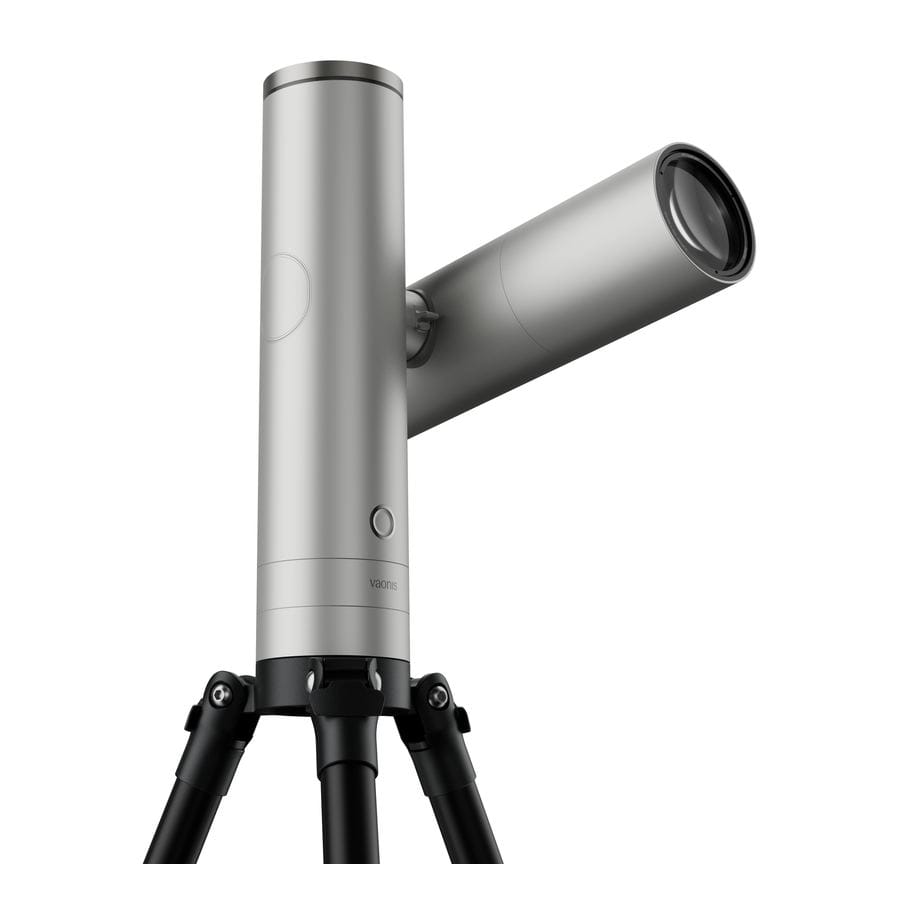
Vaonis have just revealed Atlas, a modular smart telescope with swappable imaging modules, on 15 October 2026. In the UK the Atlas Single (the mount plus one 80 mm module) is on pre-order at £3,399 from Clifton Cameras, rising to £3,799 on 16 November, with deliveries due in March 2027. It is the first smart telescope built around interchangeable optics, but at more than three times the price of a Seestar S50-class scope it is a big step up in cost as well as aperture.
What’s new
All figures are Vaonis’s own, from the Atlas product page.
- Modular design: imaging modules lock onto the mount’s Sky Dock in under five seconds; the Atlas Single carries one 80 mm module and the Atlas Twin carries two.
- Optics: 80 mm f/4.5 apochromatic quadruplet, 360 mm focal length, no central obstruction.
- Sensor: Sony IMX585, 3840 × 2160 pixels at 2.9 µm, for a native field of 1.78° × 1.00°.
- Mosaics: up to 3.5° × 2.00° and 32 MP.
- Sky Guard: a 12 MP all-sky camera with a 185° fisheye lens on top of the mount.
- Weatherproofing: IP64, an operating range of −20°C to 40°C, and a dew heater controlled by a humidity sensor.
- Power and storage: six-hour battery, 60 W USB-C charging, microSD storage.
What it means
80 mm changes what you can image
An 80 mm lens gathers about 2.6 times the light of the 50 mm optics in the Seestar range. Combined with the 360 mm focal length, the 2.9 µm pixels work out at about 1.66″ per pixel, the figure Clifton Cameras quotes, against about 2.3″ per pixel for the Seestar S50 Pro. In practice that means more detail on small galaxies and planetary nebulae, at the cost of a narrower native field than the S50 Pro’s 2.8° long edge.
The modules are the long-term bet
Today there is only one module, the 80 mm. The appeal of the modular design depends on what Vaonis adds later, and the product page lists the equatorial table for the second half of 2027 and filters and a full-aperture solar filter for late 2026. Until other modules have dates and prices, judge the Atlas on what the 80 mm can do.
Built for damp nights
The IP64 rating and automatic dew heater matter more in the UK than the headline aperture. Dew is the most common reason a smart telescope session ends early here, and the astro.pics guide to why every astrophotographer needs a dew heater covers why. The Sky Guard camera can also watch for incoming cloud during a session.
Should you upgrade?
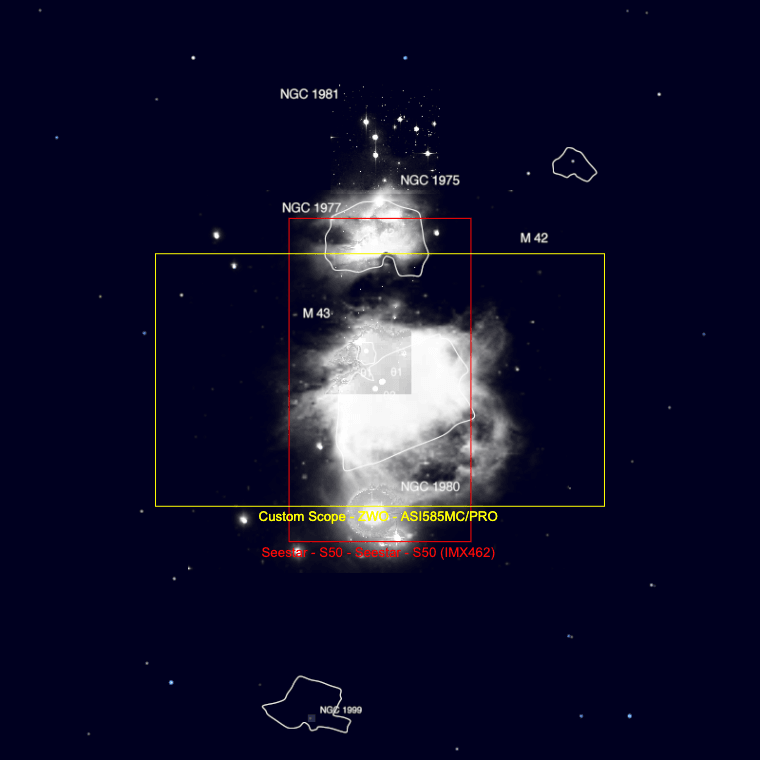
If you already own a 50 mm smart telescope and image mainly large nebulae, the Atlas’s narrower field and higher price make it hard to justify. If small galaxies and better resolution are what you are missing, it is the most capable all-in-one option announced so far, but it does not ship until March 2027, and equatorial mode needs an accessory due later that year. New buyers can wait for owners’ results before committing. For alternatives available now, see the smart telescope comparison.
Source: Vaonis Atlas product page, announced 15 October 2026; UK price from Clifton Cameras (October 2026); launch report from PetaPixel. Also read the DWARF Mini review for a very different, far cheaper take on the smart telescope.